-Draft-
Version 1.0. Last Updated: April 24,2025
Web-Enabled Molecular Systems Architecture of Interactome in the Acute Myeloid Leukemia Microenvironment
Supplementary Information To
Molecular Systems Architecture of Interactome in the Acute Myeloid Leukemia Microenvironment
V.A. Shiva Ayyadurai1, Prabhakar Deonikar1, Kevin G. McLure2 and Kathleen M. Sakamoto31Systems Biology Group, International Center for Integrative Systems, Cambridge, MA 02138, USA2Ermaris Bio, Inc., Oakland, CA 94618, USA3Division of Hematology/Oncology, Department of Pediatrics, Stanford University, Stanford, CA 94305, USA
Summary
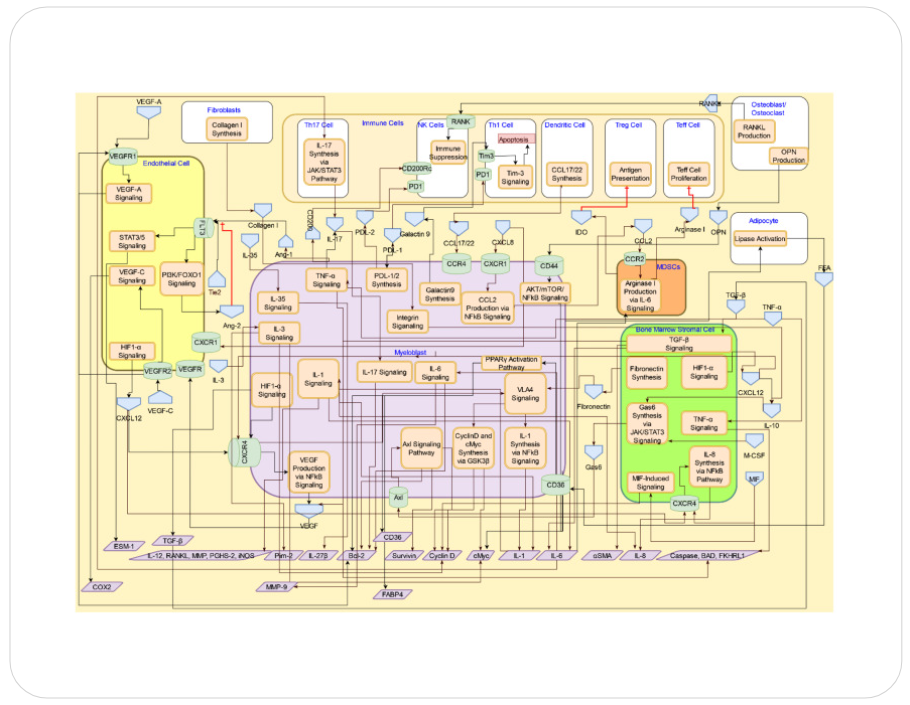
Acute myeloid leukemia (AML) is a cancer of blood and bone marrow that causes rapid production of abnormal red and white blood cells. Once established, the cancer cells communicate through a complex set of molecular interactions with neighboring cells in order to survive, spread rapidly, and evade detection and destruction by the body’s immune system. In this study, a systematic review produced a comprehensive set of critical molecular interactions that was then organized into molecular “systems architecture” to map the communications between cancer cells and neighboring cells. This systems architecture may aid in identifying effective targets that disrupt communication between the cancer cells and the neighboring environment, leading to effective treatment strategies.
A molecular systems architecture is presented for acute myeloid leukemia (AML) to provide a framework for organizing the complexity of biomolecular interactions. AML is a multifactorial disease resulting from impaired differentiation and increased proliferation of hematopoietic precursor cells involving genetic mutations, signaling pathways related to the cancer cell genetics, and molecular interactions between the cancer cell and the tumor microenvironment, including endothelial cells, fibroblasts, myeloid-derived suppressor cells, bone marrow stromal cells, and immune cells (e.g., T-regs, T-helper 1 cells, T-helper 17 cells, T-effector cells, natural killer cells, and dendritic cells). This molecular systems architecture provides a layered understanding of intra- and inter-cellular interactions in the AML cancer cell and the cells in the stromal microenvironment. The molecular systems architecture may be utilized for target identification and the discovery of single and combination therapeutics and strategies to treat AML.