-Draft-
Version 1.0. Last Updated: June 01,2026
Web-Enabled Systems Architecture of ARDS
Supplementary Information To A Molecular Systems Architecture of ARDS
A. Shiva Ayyadurai1,2*, Prabhakar Deonikar1,2 and Yamuna Manoharan1,21Systems Biology Group, CytoSolve Research Division, CytoSolve, Inc., Cambridge, MA, USA2Open Science Institute, International Center for Integrative Systems, Cambridge, MA, USA
Summary
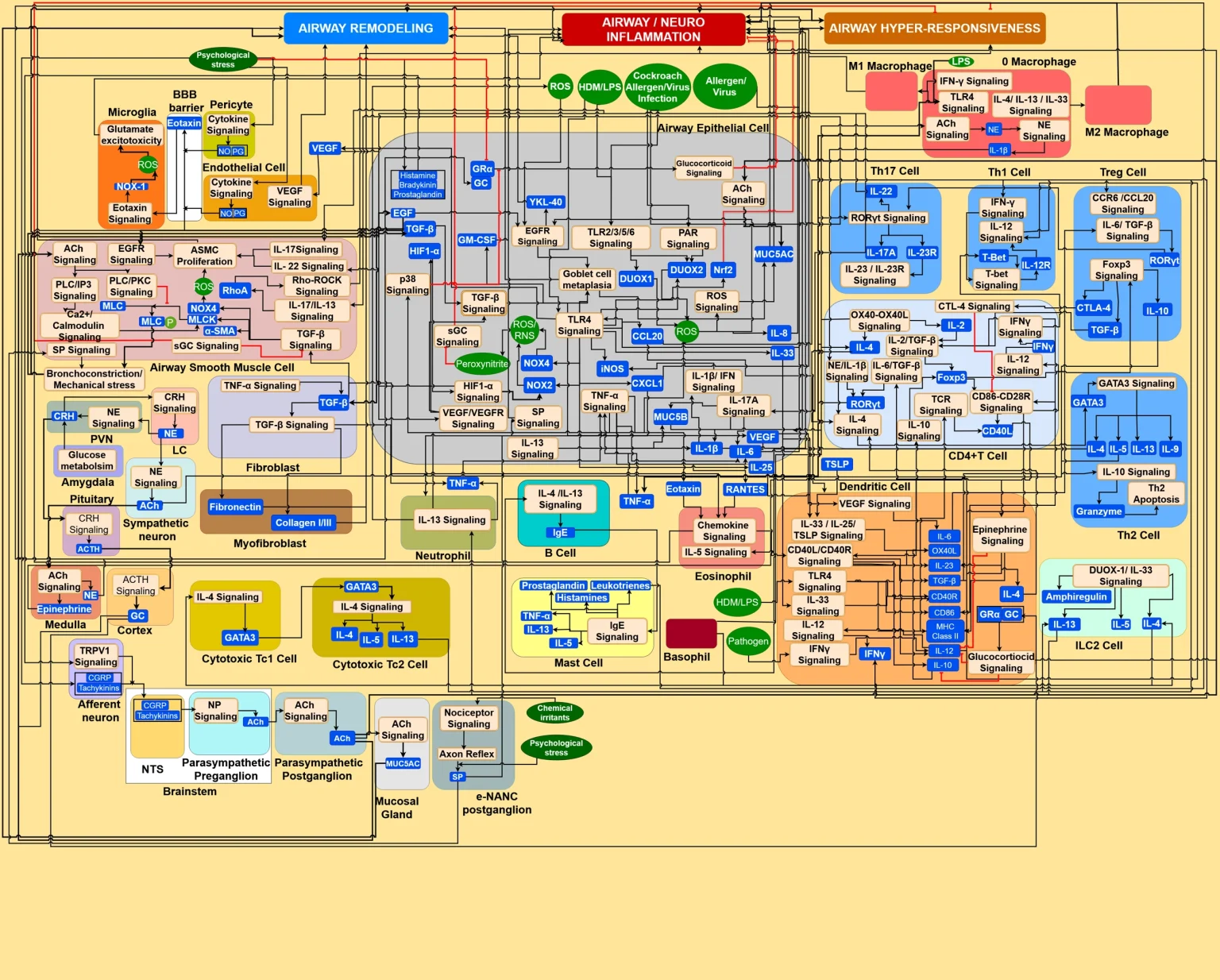
This systematic review presents a comprehensive molecular systems architecture of Acute Respiratory Distress Syndrome (ARDS), integrating current knowledge of immune, epithelial, endothelial, and inflammatory networks into a unified framework. Moving beyond conventional reductionist approaches, the study maps the complex interactions among alveolar epithelial cells, pulmonary endothelial cells, alveolar macrophages, neutrophils, dendritic cells, fibroblasts, and circulating immune populations. The architecture is organized into four interconnected layers: Triggers (sepsis, pneumonia, viral infections, aspiration, trauma, and systemic inflammation), Anatomical Components (alveolar-capillary barrier, immune cells, and pulmonary vasculature), Molecular Pathways, and Biological Processes. These layers collectively drive the cardinal features of ARDS, including diffuse alveolar damage, increased vascular permeability, pulmonary edema, severe hypoxemia, and progressive lung dysfunction.
A major contribution of this framework is the characterization of the immune-inflammatory axis underlying ARDS progression. The review highlights how pathogen-associated and damage-associated molecular patterns activate pattern-recognition receptors such as TLRs, RAGE, and NLRP3, triggering downstream signaling cascades including NF-κB, MAPK, JAK-STAT, and STING pathways. Activated alveolar macrophages and epithelial cells release cytokines such as IL-1β, IL-6, IL-8, and TNF-α, recruiting neutrophils that amplify tissue injury through reactive oxygen species, proteases, and neutrophil extracellular traps (NETs). This dysregulated inflammatory response disrupts epithelial and endothelial junctions, promotes microvascular thrombosis, and establishes a self-sustaining cycle of lung injury that can extend into systemic inflammatory response syndrome and multi-organ dysfunction.
The architecture further identifies multiple candidate therapeutic targets, including NLRP3 inflammasome components, TLR signaling molecules, RAGE, VEGF, TGF-β, EGFR, complement cascade proteins, and cytokine mediators such as IL-6 and TNF-α. By providing a systems-level interactome of epithelial injury, endothelial dysfunction, immune dysregulation, oxidative stress, and fibroproliferative remodeling, the framework establishes a foundation for computational disease modeling and precision medicine. These predictive models aim to stratify ARDS subphenotypes, identify personalized therapeutic combinations, and optimize treatment timing and dosage, potentially improving outcomes while reducing treatment-related complications. This holistic systems-biology approach offers a new paradigm for understanding the heterogeneous mechanisms and clinical manifestations of ARDS.