-Draft-
Version 1.0. Last Updated: June 11,2026
Web-Enabled Systems Architecture of Chronic Obstructive Pulmonary Disease (COPD)
Supplementary Information To A Molecular Systems Architecture of COPD
A. Shiva Ayyadurai1,2*, Prabhakar Deonikar1,2 and Yamuna Manoharan1,21Systems Biology Group, CytoSolve Research Division, CytoSolve, Inc., Cambridge, MA, USA2Open Science Institute, International Center for Integrative Systems, Cambridge, MA, USA
Summary
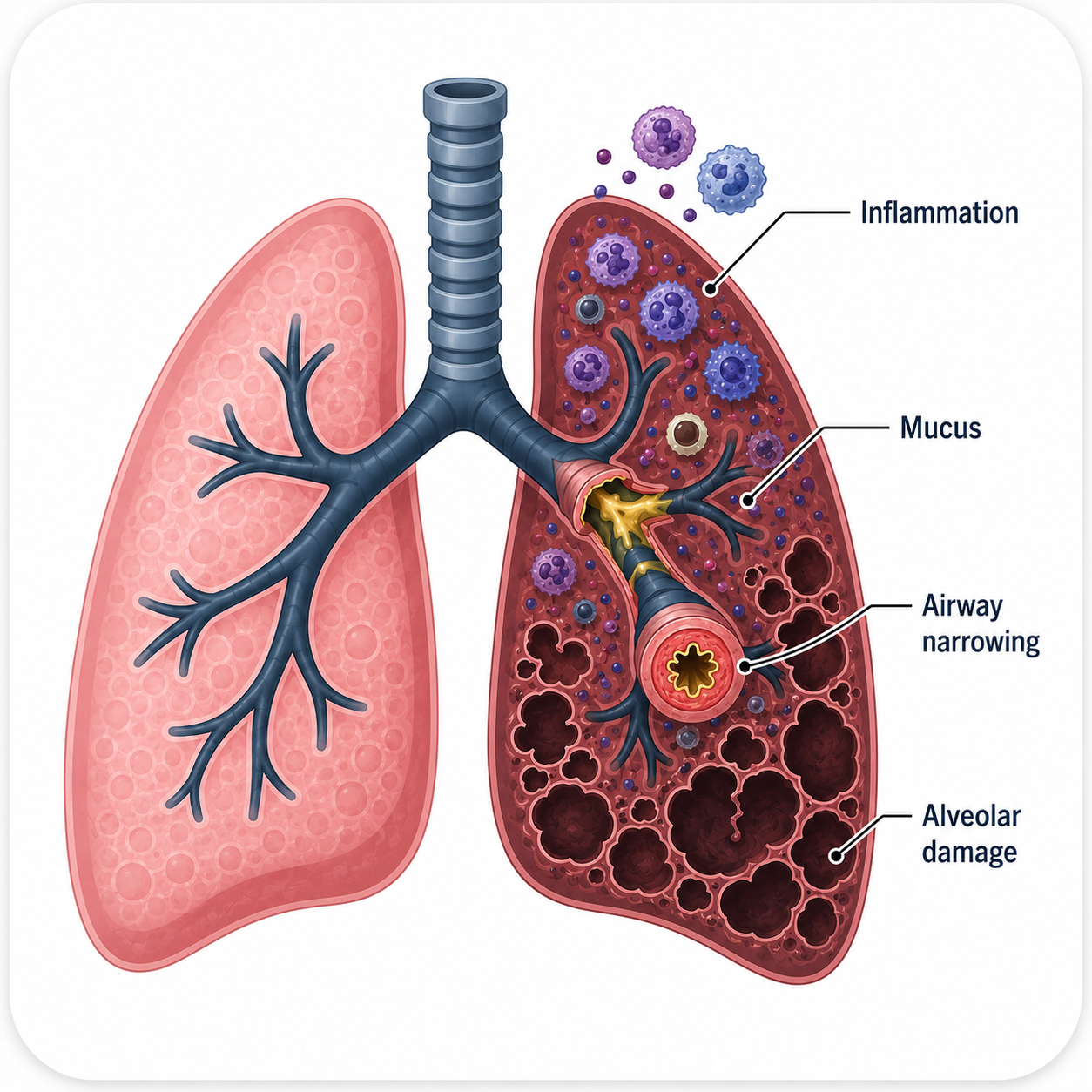
This systematic review presents a comprehensive molecular systems architecture of Chronic Obstructive Pulmonary Disease (COPD), utilizing the CytoSolve platform to integrate decades of research into a multi-layered framework. Moving beyond traditional reductionist approaches, the study maps the complex interactions among multiple pulmonary, immune, and inflammatory cell types along with key molecular signaling pathways involved in COPD progression. The architecture is organized into four functional layers: Triggers (such as cigarette smoke, air pollution, occupational exposure, genetic susceptibility, and lifestyle factors), Anatomical Components (including airway epithelial cells, alveolar macrophages, neutrophils, fibroblasts, and neuronal cells), Molecular Pathways, and Biological Processes. These interconnected layers collectively contribute to the major hallmarks of COPD, including chronic airway inflammation, airflow limitation, mucus hypersecretion, emphysema, and structural remodeling of the lungs
A major contribution of this research is the detailed characterization of the neuro-immune axis in COPD, demonstrating how psychological stress, anxiety, and depression can worsen disease severity and respiratory symptoms. The study describes the bidirectional communication between the brain and lungs through neural and humoral signaling pathways. For instance, inflammatory mediators released by activated macrophages and neutrophils in the lungs can cross the blood-brain barrier and promote neuroinflammation, while chronic stress activates the hypothalamic-pituitary-adrenal (HPA) axis and autonomic nervous system responses, resulting in increased airway inflammation, oxidative stress, mucus production, and bronchoconstriction. These mechanisms further aggravate respiratory dysfunction and disease progression in COPD patients.
The systems architecture identifies several candidate molecular targets, including TNF-α, IL-8, EGFR, NF-κB, and TGF-β, which may serve as promising therapeutic targets for future COPD drug development. By offering a systems-level interactome and visual molecular map, the framework provides a foundation for advanced computational modeling and predictive simulations. These models may help identify personalized treatment strategies, combination therapies, and optimized dosing regimens tailored to different COPD phenotypes and disease severities while minimizing adverse effects. Overall, this holistic systems biology approach introduces a new paradigm for understanding the complex and heterogeneous nature of COPD and improving its long-term clinical management.