-Draft-
Version 1.0. Last Updated: July 10,2026
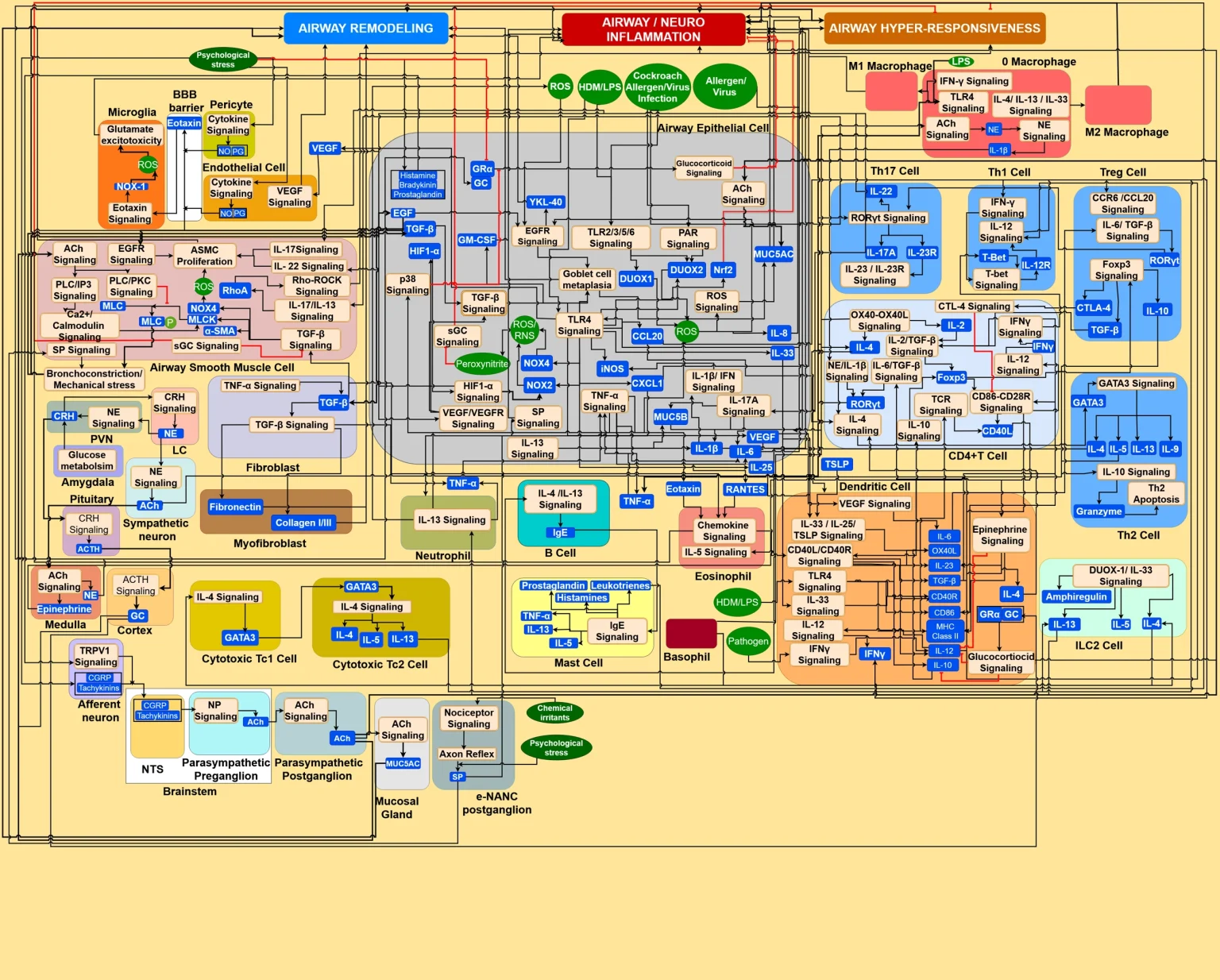
Web-Enabled Systems Architecture of Pulmonary Fibrosis
Supplementary Information To A Molecular Systems Architecture of Pulmonary Fibrosis
A. Shiva Ayyadurai1,2*, Prabhakar Deonikar1,2 and Yamuna Manoharan1,21Systems Biology Group, CytoSolve Research Division, CytoSolve, Inc., Cambridge, MA, USA2Open Science Institute, International Center for Integrative Systems, Cambridge, MA, USA
Summary
Idiopathic pulmonary fibrosis (IPF) is a progressive, irreversible lung disease characterized by excessive extracellular matrix accumulation, disrupted lung architecture, and declining pulmonary function, often exacerbated by severe comorbidities. To address this biological complexity, a comprehensive molecular systems architecture was developed to enable a system-level understanding of biomolecular interactions within the fibrotic lung microenvironment. A systematic literature search was conducted across PubMed, Medline, and Google Scholar for peer-reviewed articles published from April 2008 to June 2025 using specific Medical Subject Headings (MeSH) keywords. Using the systems biology tool CytoSolve®, full-length articles were curated to construct a multi-layered framework that maps out the intricate cellular and molecular pathogenesis of the disease.
The resulting architecture integrates complex interactions across sixteen lung-associated cell types, including epithelial, endothelial, mesenchymal, immune, and stromal populations. External and physiological triggers—such as bleomycin, asbestos, silica, radiation, cigarette smoke, Herpes virus, genetic mutations SFTPCI173T, and comorbidity-associated hypoxia—initiate coordinated cellular responses. These pathways ultimately converge on three fundamental pathological processes: inflammation, myofibroblast differentiation, and tissue remodeling, which collectively drive IPF progression. Ultimately, this unified framework links triggers, cellular components, and intra- and inter-cellular molecular pathways to their pathological outcomes. By establishing this systemic foundation, the architecture serves as a critical tool for identifying novel therapeutic targets, discovering biomarkers, and designing rational single- and combination-treatment strategies to significantly enhance clinical outcomes for IPF patients.